I hadn’t been released as a medic for long. Released means the training wheels come off: no preceptor watching over your shoulder, no one to check your decisions before you make them. You’re trusted to practice on your own. I was proud of that, and I didn’t yet understand everything that came with it.
The call was for a man with chest pain and a heart rate that was running far too fast. He was awake, talking to us, and scared.
The protocol at the time was clear: a dose of lidocaine, and if that didn’t do it, a second dose. The first dose didn’t do much. The second one worked. His rhythm broke and settled into something stable, and you could see him relax a little. So could I.
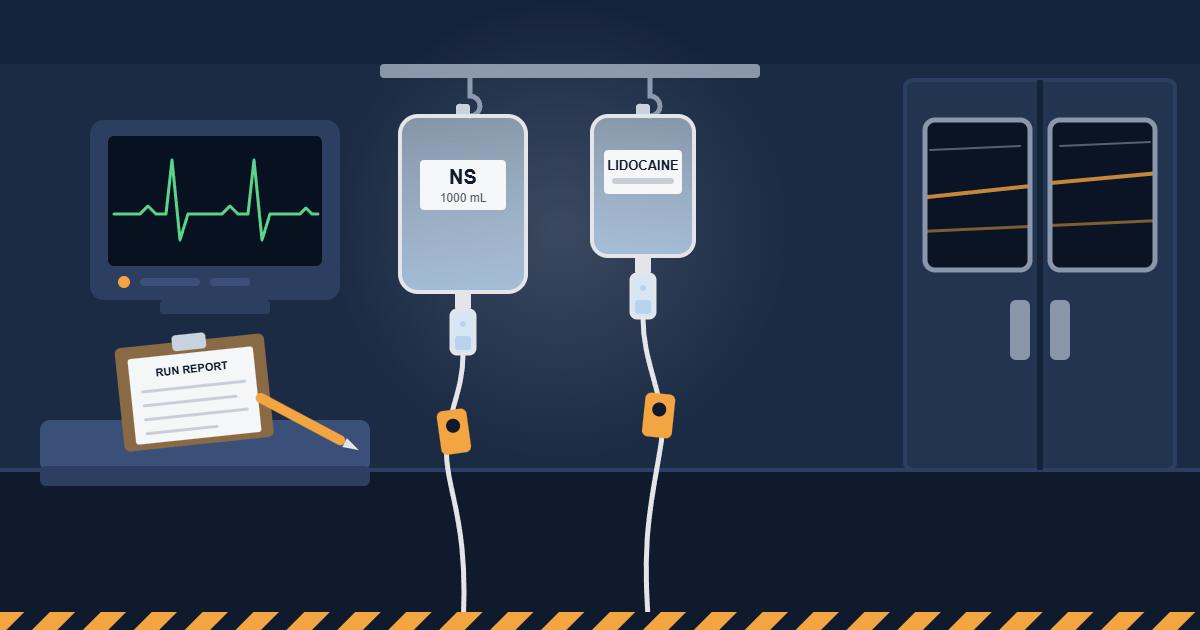
The protocol was clear about what came next, too. If lidocaine worked, you started a lidocaine drip to keep it working. So I hung the bag and started the drip, exactly the way I’d been taught.
On the way to the hospital, he started to change. He went from talking to me, to begging me to help him, to not answering at all. Then he coded.
We worked him the rest of the way in. When we came through the doors of the ER we were doing CPR, with the normal saline running wide open and the lidocaine drip turned off. We handed him over and the hospital team took it from there.
At some point after that, inside the ER, both bags were opened up.
He died. It turned out he had a ventricular aneurysm, something no protocol and no amount of lidocaine was going to fix.
But that isn’t where it ended for me. The question that came back was whether he’d been overdosed on lidocaine, and the name on the run report was mine.
I was a brand-new medic, and I was being blamed for a patient’s death.
What followed was depositions. Review after review with my medical director, going over every step of the call. Being grilled by the regional EMS council. Answering the same questions over and over, knowing what I had done and what I hadn’t, and having to prove it anyway.
Eventually it was determined that I had not overdosed him. I was exonerated.
I was cleared, but I didn’t walk away the same. Watching a patient go from alert and talking, to begging for help, to gone, and then having to defend every decision I’d made along the way, taught me something no class ever did: what it really means to be trusted to practice on your own.
Autonomy is the whole point of being released. It’s also a weight. Every decision you make is yours to answer for, whether the outcome is good, bad, or decided by something you never could have seen.
It was a hard lesson, and a stressful one. I carried it with me for the rest of my career.
Shared anonymously by a paramedic in Virginia.